Pay attention to how you personally searched for information online last month. Not how you used to search. Last month. There is a reasonable chance that at some point you typed a question into ChatGPT instead of Google. Or you typed something into Google and an AI generated summary appeared at the top before any links showed up and you read that summary and closed the tab without clicking anything. If that happened even once you experienced exactly the shift that is making generative engine optimization one of the most important things USA businesses need to understand right now.
The traditional search model worked on a simple mechanic. Person types query. Google returns list of links. The person clicks the link. The website gets visitors. Businesses get a chance to convert that visitor into a customer. That mechanic still exists. It is not dead. But a significant and growing portion of search behavior is bypassing the click entirely because the AI answer was sufficient. The person got what they needed. No link got clicked. And if a business was not part of the source material the AI drew from to construct that answer it did not exist in that interaction at all. Not ranked poorly. Not on page two. Completely absent.
That is what generative engine optimization addresses. Not by replacing traditional SEO. By extending it into territory the old playbook was never designed to cover.
There is a temptation in marketing conversations to describe new developments as more revolutionary than they are. Everything becomes the future of everything else. Most of the time the reality is more incremental than the language suggests. GEO is genuinely different from that pattern. The behavioral shift toward AI assisted search is real, measurable and accelerating in the USA market in ways that have direct commercial consequences for businesses that ignore it.
ChatGPT crossed 200 million weekly active users in 2024. Google AI overviews now appear for a substantial portion of commercial search queries. Perplexity has built a loyal user base specifically among the research oriented demographic that tends to make considered purchase decisions rather than impulsive ones. These are not niche tools used by a small technical audience. They are mainstream platforms that regular American consumers are using to research products, compare services, evaluate providers and make decisions that used to send traffic to websites.
The businesses appearing in AI generated answers for relevant queries are not necessarily the businesses with the highest traditional search rankings. The signals AI systems use to select and cite sources are related to but not identical to the signals Google uses to rank pages. That gap is where generative engine optimization lives and it is where real competitive advantage is available right now for USA businesses willing to act before the space becomes as crowded as traditional SEO.
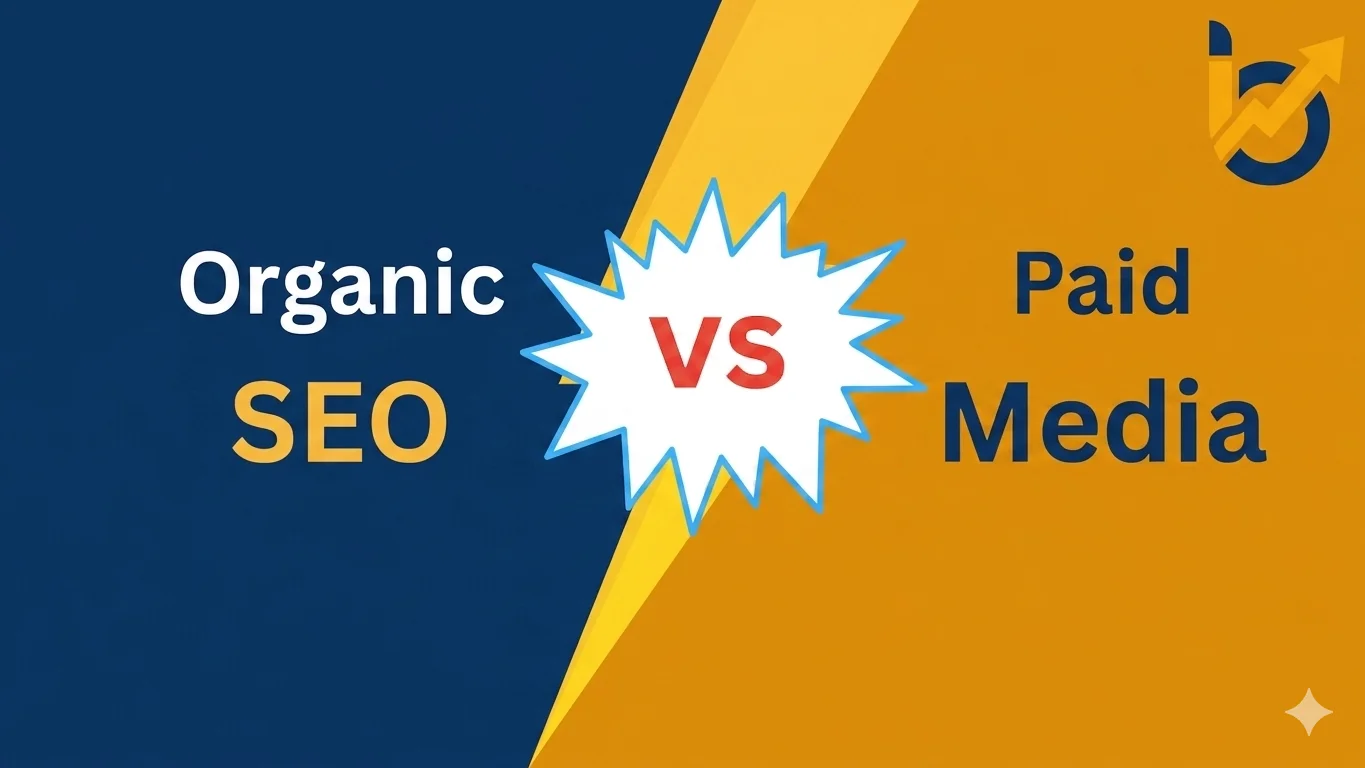
This framing causes confusion. GEO vs SEO suggests a choice between two strategies where investing in one comes at the expense of the other. That is not how it works. A better way to think about it is that SEO optimizes for ranking position in link based results and GEO optimizes for inclusion in AI generated answers. Both matter. The overlap between what works for each is substantial. The differences are specific and worth understanding rather than ignoring in favor of a false simplicity.
Traditional SEO cares enormously about backlinks as authority signals. Keyword density and placement. Technical crawlability. Page speed. These remain relevant for ranking in traditional results. AI search optimization cares about different things on top of those fundamentals. Factual specificity in content rather than vague generalities. Original data, research or perspectives rather than curated summaries of what already exists elsewhere. Clear direct answers to specific questions rather than content that introduces a topic extensively without ever landing on anything definitive. Named author expertise signals that give AI systems a credibility anchor for the content they are evaluating.
The practical implication is that businesses investing in GEO tend to produce better content for traditional SEO at the same time because the content characteristics AI systems reward are genuinely the same characteristics that make content more useful to human readers. The GEO layer is not a separate parallel effort. It is a specific set of emphases applied to content strategy that improves performance across both channels simultaneously.
When ChatGPT or any large language model generates a response to a query it draws on patterns learned from training data combined with whatever current web content it can access through browsing. The model has effectively internalized a representation of what credible, authoritative content looks like across millions of documents. When it evaluates whether a source is worth drawing from it is applying that internalized standard.
A practical ChatGPT SEO strategy starts with understanding what that standard looks like in the content categories relevant to the business. A few things come up consistently across research into what AI systems cite preferentially. Content that makes specific verifiable claims rather than general statements. Content associated with authors who have visible credentials and a public professional presence. Content that cites other credible sources rather than presenting unsupported assertions. Content that covers a topic with genuine depth rather than the surface level overview that fills a keyword requirement without providing real informational value.
For a USA business this translates into some specific actions. Producing original research or data related to the industry rather than only commenting on research others have produced. Building author profiles that establish genuine expertise signals rather than publishing content anonymously or under generic bylines. Creating content that answers the specific questions customers ask in the early research stages of their buying journey with enough specificity that an AI system would find the answer worth citing. These are not dramatically different from what good content marketing has always required. They are the same principles applied with GEO inclusion as an explicit objective alongside traditional ranking.
Answer engine optimization is not a new concept. Optimizing content to appear in Google featured snippets, People Also Ask boxes and knowledge panels has been a recognized SEO practice for years. What has changed is the scale and sophistication of the answer layer sitting above traditional results. Featured snippets were one answer per query at the top of a results page. AI overviews synthesize information from multiple sources and generate a custom answer for each query that may be slightly different from every answer that came before it because the AI is generating rather than retrieving.
This synthesis is what makes answer engine optimization for the AI era different from winning a featured snippet. Winning a featured snippet meant getting one specific piece of content selected for one specific query format. Getting cited in AI generated answers means producing content with the characteristics that make it useful source material for a range of related queries rather than one exact match. The scope is broader and the content investment required is deeper but the competitive advantage for businesses that get there first is also more durable.
The structural elements that work for traditional answer optimization still apply. Question and answer content formats. Clear concise paragraph answers that fully address a specific question early in the response before expanding into supporting context. Proper heading hierarchy that makes content navigable. FAQ sections that mirror the actual questions people ask rather than questions that sound good but nobody types. These are the starting points for answer engine optimization that transfers across both traditional and AI search contexts.
Honestly most are not thinking about this yet. They are managing traditional SEO, running paid campaigns, handling social media and dealing with the hundred other demands of running a business. GEO feels abstract compared to a Google Ads dashboard showing cost per click and conversion data. That abstraction is gradually becoming more expensive as AI search behavior grows.
The businesses getting ahead of this in 2026 are not necessarily the largest ones with the biggest marketing budgets. They are the ones paying attention to where their brand mentions are appearing, what questions in their category are generating AI answers that do not include them and what content gaps exist between what they currently publish and what AI systems in their industry are citing. That audit does not require a massive budget. It requires honesty about where current content falls short of the specificity and depth that AI citation tends to reward.
Stop publishing content that exists to fill a keyword gap without adding something genuinely useful. AI systems have encountered thousands of similar articles and do not need another one. Start asking what specific question this piece of content answers better than anything currently available on this topic.
Build real author expertise signals. Named authors with bios, credentials, professional profiles and consistent publication histories. AI systems that evaluate content credibility use these signals and anonymous or generic byline content is at a disadvantage regardless of quality.
Add original data wherever possible. A survey of customers. An analysis of industry data. A proprietary finding that does not exist anywhere else. These are the content types AI systems cite preferentially because they contribute something new rather than recirculating existing information.
Generative engine optimization is where search is going whether individual businesses are ready for it or not. GEO vs SEO is not a strategic debate about which approach matters. Both matter and they reinforce each other when implemented well. AI search optimization, ChatGPT SEO strategy and answer engine optimization are the specific mechanisms through which businesses maintain visibility in a search environment that is rapidly making the click optional for a growing percentage of user queries. The businesses building GEO authority now are establishing positions in AI generated answers that will be significantly harder to displace once the space becomes as competitive as traditional search rankings. IB2Marketing GEO Services help USA businesses understand where they currently appear in AI generated answers, what is keeping them out of the citations they should be earning and what content and authority building actions will change that. Call 609-596-5511 or email info@ib2marketing.com to start that conversation before competitors in the same market get there first.
GEO (Generative Engine Optimization) helps businesses appear in AI-generated answers from platforms like ChatGPT and Google AI. IB2Marketing helps companies improve visibility, authority and citation opportunities in AI search results.
No. GEO complements traditional SEO. IB2Marketing combines both strategies to help businesses rank in search engines and appear in AI-generated responses.
AI-powered search is growing rapidly and many businesses still lack a GEO strategy. IB2Marketing helps brands gain an early advantage before AI search becomes as competitive as traditional SEO.
Original research, expert insights, clear answers and authoritative content perform best. IB2Marketing develops content strategies designed for both AI citations and organic search visibility.
IB2Marketing can audit your brand's presence across AI platforms, identify missed citation opportunities and recommend actions to improve visibility in generative search results.
Contact IB2Marketing at 609-596-5511 or info@ib2marketing.com for a GEO assessment and discover how your business can increase visibility in AI-driven search experiences.
A Performance Marketing Company Delivering Results-Driven Solutions For Businesses



Have a question? We’d love to hear from you. Send us a message and we’ll get back to you as soon as possible.
Send 609-596-5511